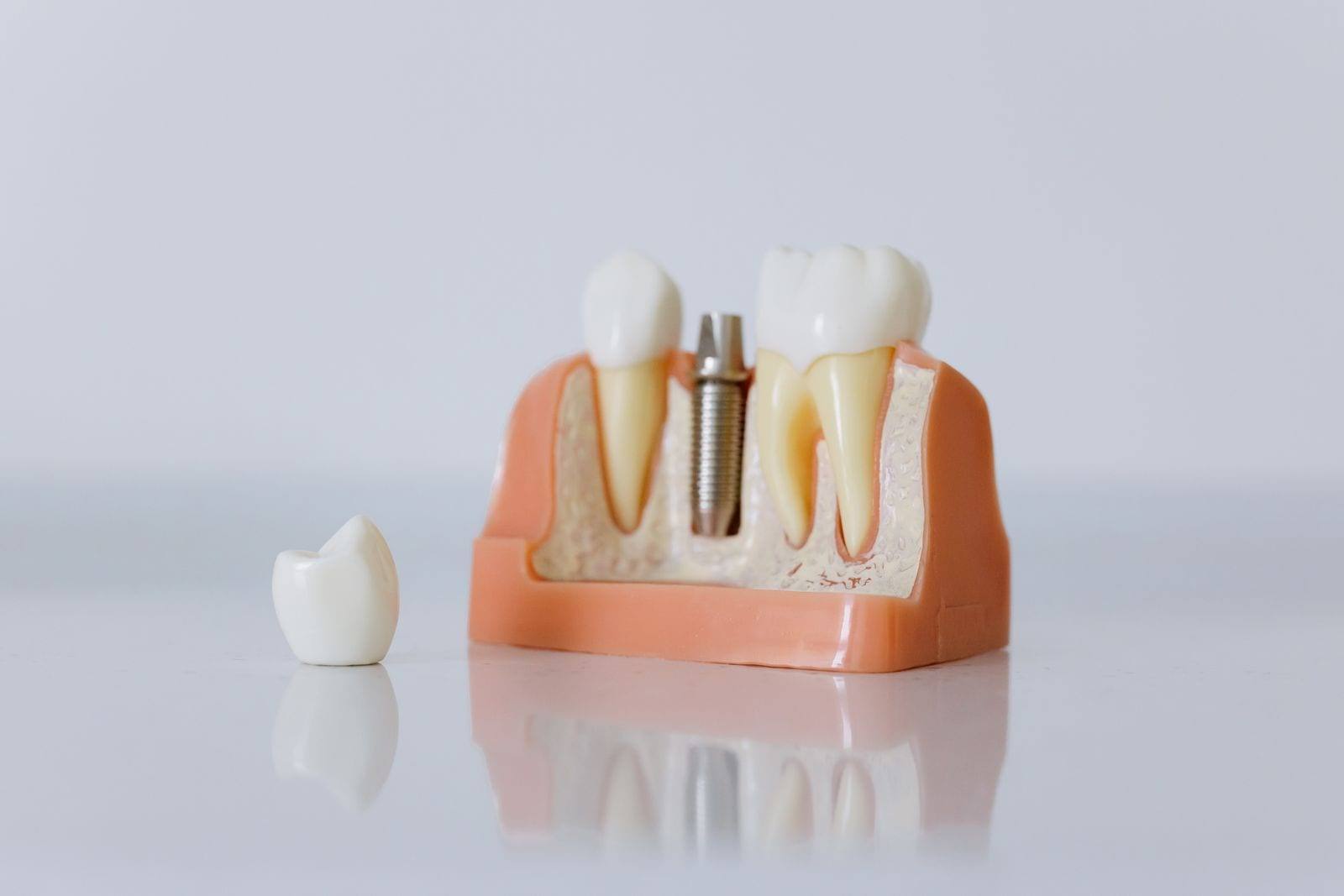
A titanium implant replaces the root of a missing tooth and supports a natural-looking crown. Every Molly implant is planned on a 3D CBCT scan.
A dental implant replaces a missing tooth from the root up. A small titanium post is placed in the jawbone, the bone bonds to its surface over a few months, and a custom crown is attached on top. The new tooth is fixed in place, looks like its neighbors and lets you chew normally. Implants are also used to replace several teeth with a bridge, or a whole arch of teeth.
Planned in 3D, placed with a guide
Every implant at Molly begins with a 3D cone-beam CT (CBCT) scan and a digital scan of your teeth. Together they show your surgeon the height and width of your bone, the position of the nerve in the lower jaw and the sinus in the upper jaw, and how the final crown should sit in your bite. The implant is planned in software around that final tooth, rather than placed wherever the bone happens to allow.
For many cases, the plan is turned into a 3D-printed surgical guide. It fits over your teeth and directs the implant to the planned angle and depth, which often means a smaller opening, less swelling and a more predictable result. If the scan shows too little bone, your surgeon will explain whether a bone graft or sinus lift is needed first, or can be done at the same visit.
Most single implants are placed under local anesthetic, and many patients choose IV sedation for a calmer experience. Placing one implant typically takes about an hour. Most people return to work the next day or the day after.
Healing, the crown and the long term
Over roughly three to six months, the bone grows onto the implant in a process called osseointegration. In the meantime, you have a temporary tooth if the gap shows when you smile. Once the implant is stable, your surgeon or your own dentist attaches an abutment and a custom crown shaded to match your other teeth. We work closely with your general dentist, and many patients have their crown made there.
Implants have high long-term success rates in healthy patients, but no implant is certain to last for life. Smoking, uncontrolled diabetes, untreated gum disease and grinding raise the risk of problems. The gum and bone around an implant can become inflamed if plaque builds up, so brushing, flossing and regular cleanings matter as much as they do for natural teeth.
The implant consultation, including the CBCT scan, is complimentary. Afterward you receive one written quote that includes imaging, any extraction or grafting, anesthesia, the implant, the abutment and the crown, with your insurance benefits applied.