Diagnosis and treatment of sores, patches, lumps, cysts and growths of the mouth and jaws, including biopsy with results explained by your surgeon.
Oral pathology is the diagnosis and treatment of diseases of the mouth, jaws and nearby structures. Most of what oral surgeons see is harmless: an irritated patch from a sharp tooth, a small blister-like swelling from a blocked salivary gland, or a cyst picked up on a routine X-ray. Some changes need closer attention, and a small number are precancerous or cancerous. A biopsy is how we tell the difference with confidence.
When to have something checked
See your dentist or an oral surgeon if you notice any of the following, especially if it hasn't improved within two weeks:
- A sore or ulcer that doesn't heal
- A white, red or speckled patch on the gums, tongue, cheek or floor of the mouth
- A lump, thickening or rough area
- Numbness, tingling or pain without an obvious cause
- A loose tooth with no gum disease, or swelling of the jaw
- Difficulty swallowing or a persistent hoarse voice
Many patients are referred after their dentist spots something at a cleaning or on an X-ray. You don't need a referral to be seen, and we aim to see concerning findings quickly.
What a biopsy involves
A biopsy removes a small piece of tissue, or the whole area if it is small, so it can be examined under a microscope by an oral and maxillofacial pathologist. Most biopsies are done in the office under local anesthetic and take 15 to 30 minutes. A few dissolving stitches close the site, and most people go back to work the same day.
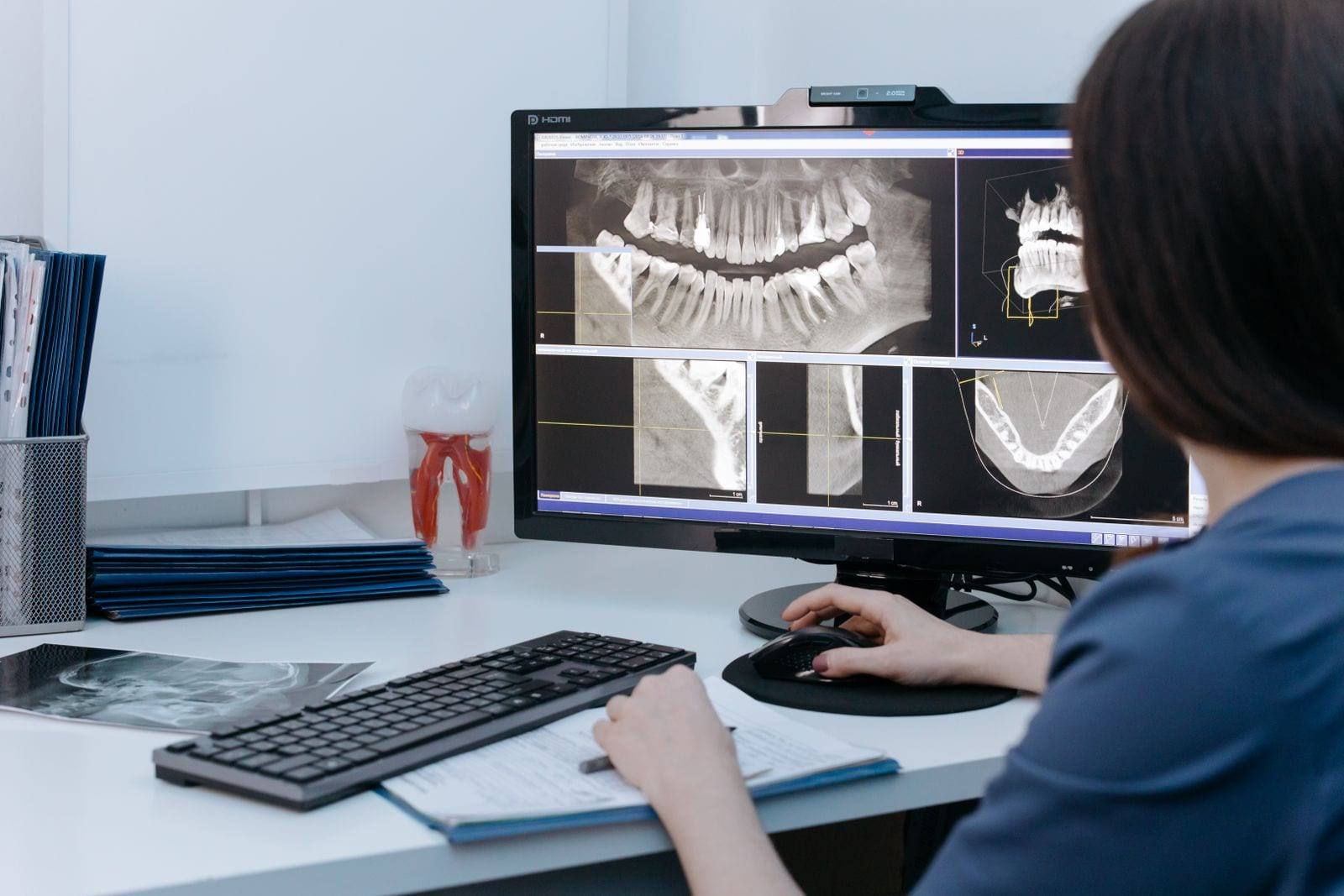
For changes in the jawbone, such as cysts or growths seen on X-rays, your surgeon first takes a 3D cone-beam CT (CBCT) scan to see the size and position of the area and its relationship to teeth and nerves. Many jaw cysts are treated by removing them completely. Larger ones may be decompressed first so they shrink, then removed later. Some procedures are done under IV sedation.
Results, and what happens next
Results typically take about seven to ten days. Your surgeon calls you or sees you to explain them in plain language, and a copy goes to your dentist and physician. Most results are benign and need no further treatment, or only monitoring. If treatment is needed, your surgeon explains the options and, where appropriate, coordinates care with head and neck cancer specialists at a hospital. Our surgeons also perform routine oral cancer screening at consultations.
Biopsies and pathology care are usually billed to medical insurance. We check your coverage first and estimate your share in writing, including the laboratory fee.