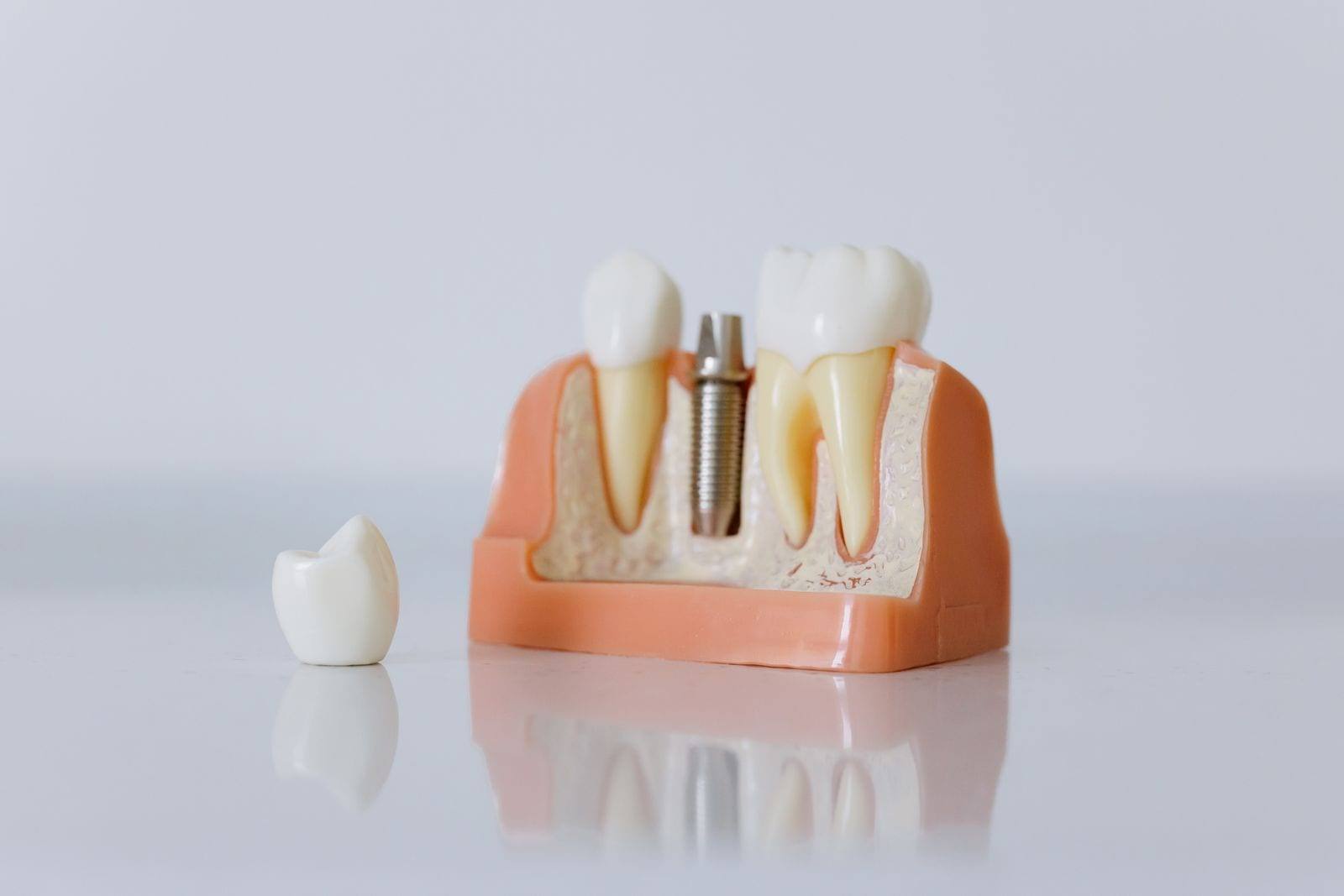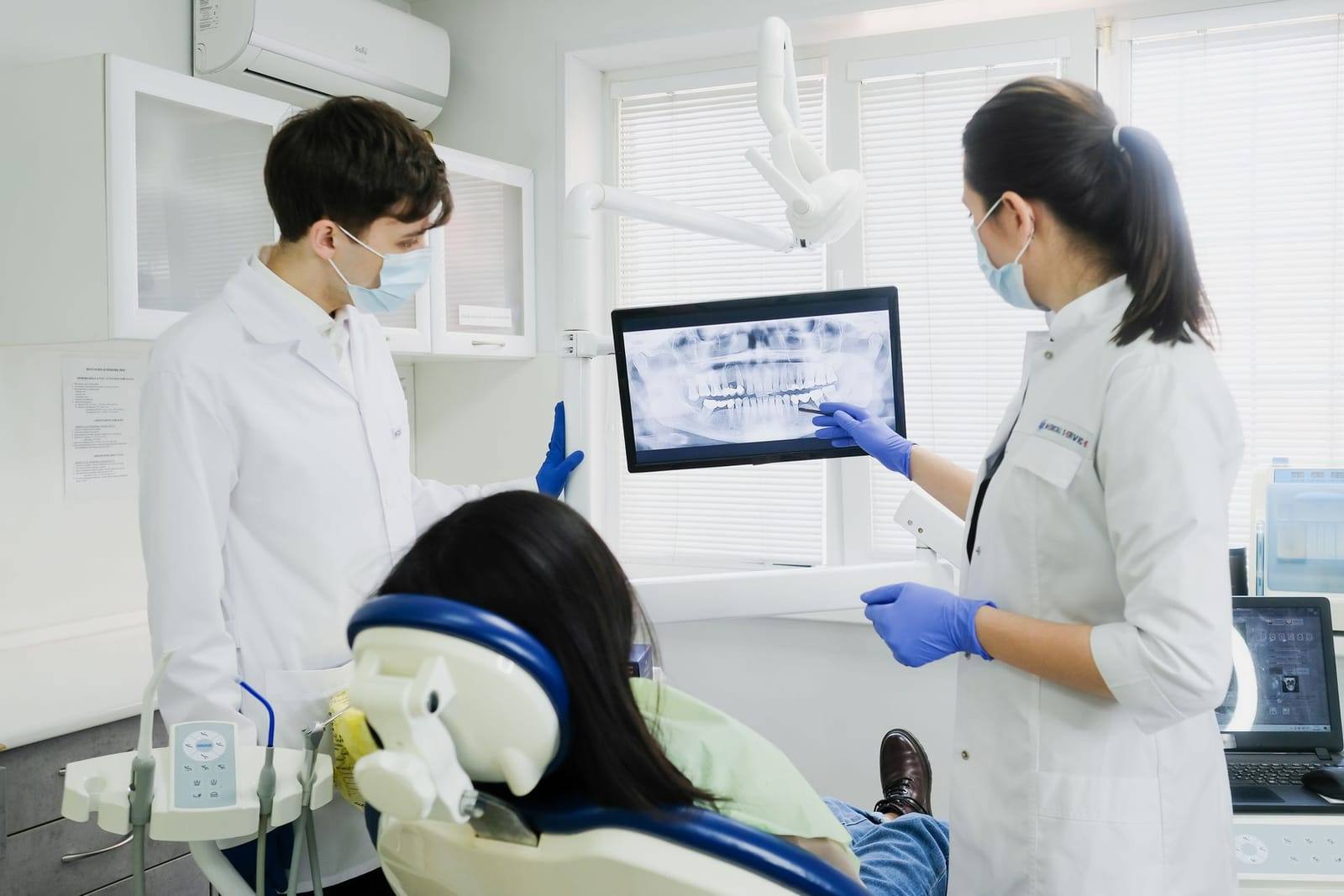
A sinus lift raises the sinus membrane and adds bone beneath it, so an implant can replace an upper molar or premolar. It is planned on a 3D CBCT scan.
Your upper back teeth sit just below the maxillary sinuses, two air-filled spaces behind your cheekbones. When a molar or premolar is lost, the bone under it slowly thins, and the floor of the sinus can drop into the space that is left. The result is often too little bone height to hold a dental implant. A sinus lift, also called sinus augmentation, gently raises the sinus membrane and places bone graft material beneath it, so there is enough bone for an implant to be placed securely.
Planned on a 3D scan
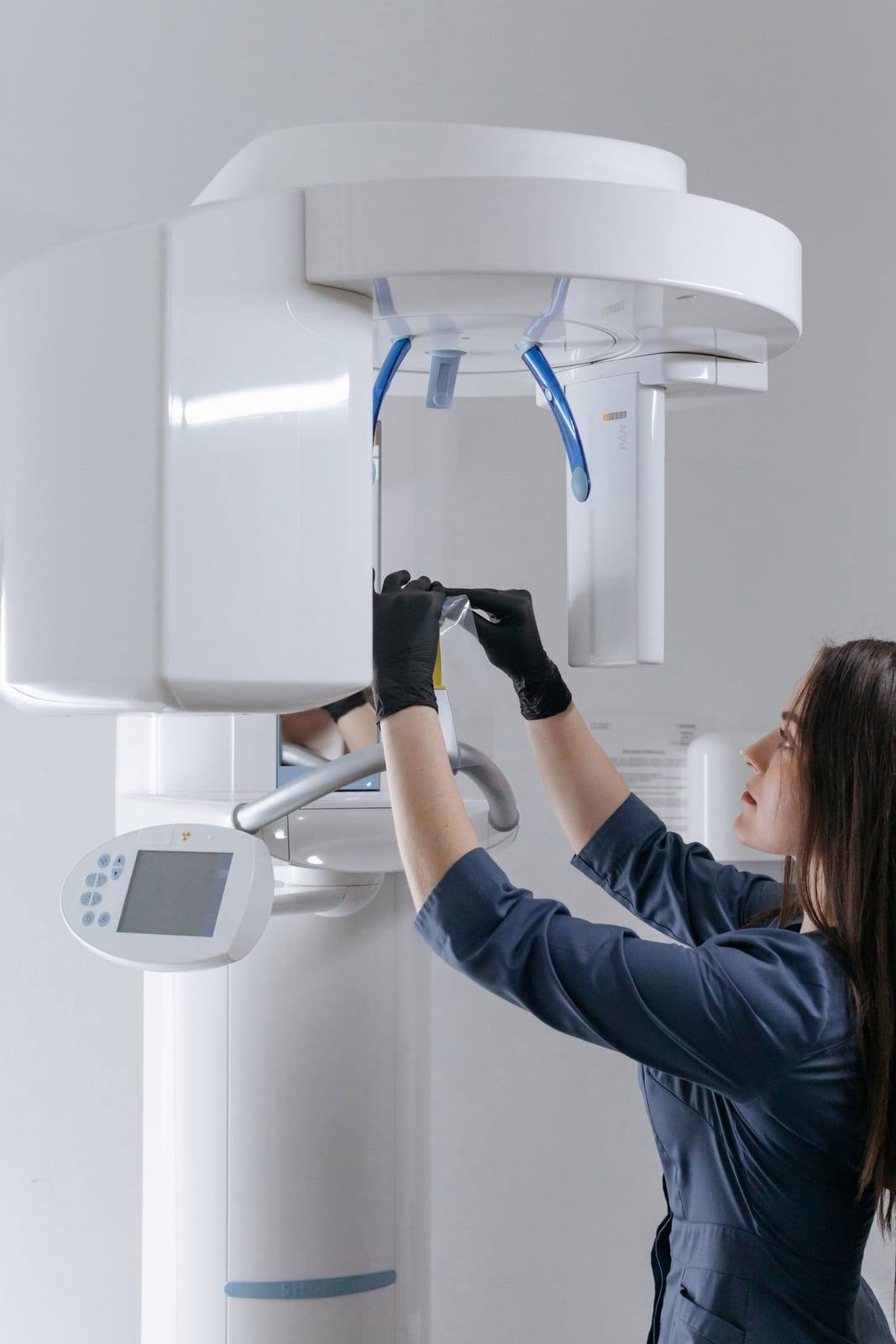
Every sinus lift at Molly starts with a 3D cone-beam CT (CBCT) scan. It shows your surgeon the exact bone height, the shape of the sinus floor, the thickness of the membrane and any signs of sinus congestion that should be treated first. A 2D X-ray cannot show that depth. From the scan, your surgeon chooses one of two approaches.
- Internal (crestal) lift. When you need only a few millimeters of extra height, the membrane is lifted through the same small opening used for the implant. The graft and the implant are often placed in one visit.
- Lateral window lift. When more height is needed, a small window is made in the side wall of the sinus, the membrane is lifted, and graft material is packed into the space. The implant goes in at the same visit if there is enough stable bone, or after roughly four to nine months of healing.
Most sinus lifts are done comfortably with local anesthetic. Many patients choose IV sedation, given with continuous monitoring of heart rhythm, oxygen and breathing. Your surgeon may also use platelet-rich fibrin, made from a small sample of your own blood, to support healing.
What recovery is like
Expect some cheek swelling and mild congestion for a few days, and occasionally light bruising or a small nosebleed. Most patients return to desk work within one to three days. The key is protecting the membrane while it heals: for about two weeks, avoid blowing your nose, sneeze with your mouth open, skip straws, and check with your surgeon before flying or diving. You will go home with written instructions, your surgeon calls the evening after surgery, and the 24/7 surgeon line answers any night of the week.
Sinus lifts have a long, well-documented track record, but they are surgery. The most common complication is a small tear in the membrane, which is usually repaired during the procedure. Less often, a sinus infection develops and is treated with medication. Your surgeon will go through your own risks plainly at the consultation, and you will receive one written quote covering the scan, graft, anesthesia, implant and follow-up visits before anything is scheduled. If you are also replacing other teeth, see how this fits with dental implants and bone grafting.