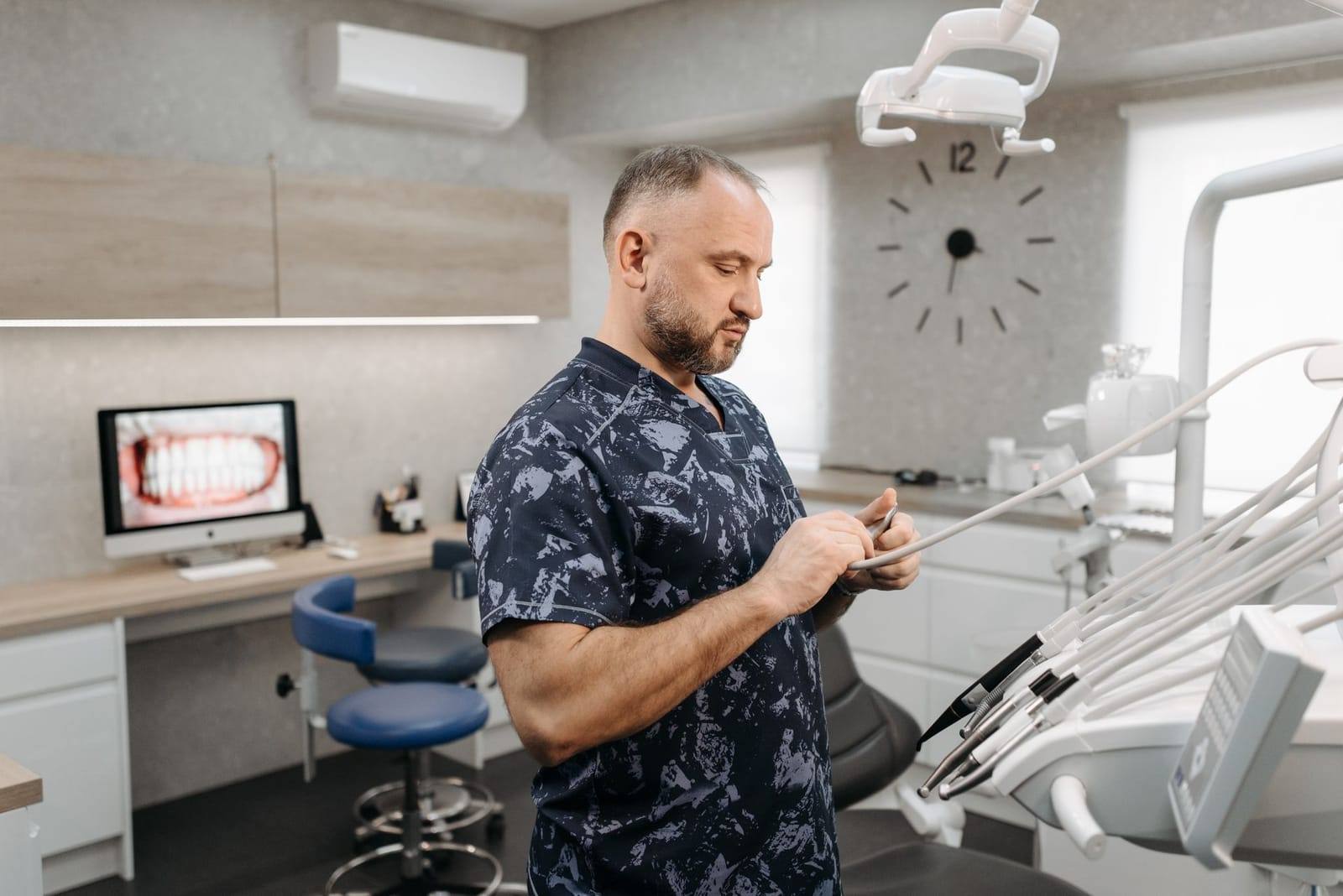
A thorough visual and hands-on exam of the mouth, throat and neck to look for early signs of oral cancer. Included with every Molly consultation.
Oral cancer is far more treatable when it is found early, yet it often causes no pain in its early stages. A screening is a careful, systematic exam of the mouth, throat and neck by someone who knows what to look for. At Molly it is part of every consultation, whatever brought you in, and it can also be booked on its own.
Who is at higher risk
Anyone can develop oral cancer, but some factors raise the risk significantly:
- Tobacco in any form, including cigarettes, cigars, pipes and chewing tobacco
- Heavy alcohol use, especially combined with tobacco
- Human papillomavirus (HPV), which is linked to a growing share of cancers in the back of the throat, including in younger non-smokers
- Sun exposure to the lips, a real consideration for people who work or play outdoors in Southern California
- Age over 40, a previous head and neck cancer, or a weakened immune system
What happens at a screening
A screening takes about ten minutes and doesn't hurt. Your surgeon looks at your lips, gums, cheeks, tongue (including the sides and underside), the floor of your mouth, the palate and the back of the throat, using good light and gentle retraction. They feel for lumps or thickened areas inside the mouth and along the jaw and neck, where lymph nodes sit. They ask about any symptoms, such as a sore that won't heal, hoarseness, trouble swallowing, or numbness.
Your surgeon may use an adjunct, such as a special light that can make some tissue changes easier to see. These tools can help, but none replaces a trained eye, and none can diagnose cancer on its own.
If something is found
Most findings are harmless: a bitten cheek, an irritated area from a sharp tooth or a denture, or a common benign growth. Often the next step is simply to remove the irritation and recheck in two weeks. If an area looks suspicious or hasn't changed at the recheck, your surgeon recommends a biopsy, usually a short in-office procedure under local anesthetic. If cancer is diagnosed, your surgeon explains the findings and coordinates prompt care with head and neck cancer specialists.
Between visits, it helps to check your own mouth once a month in a mirror. A useful rule of thumb: any sore, patch or lump that hasn't gone away within two weeks should be looked at. You don't need a referral to be seen, and screenings are included at no extra charge with every Molly consultation.