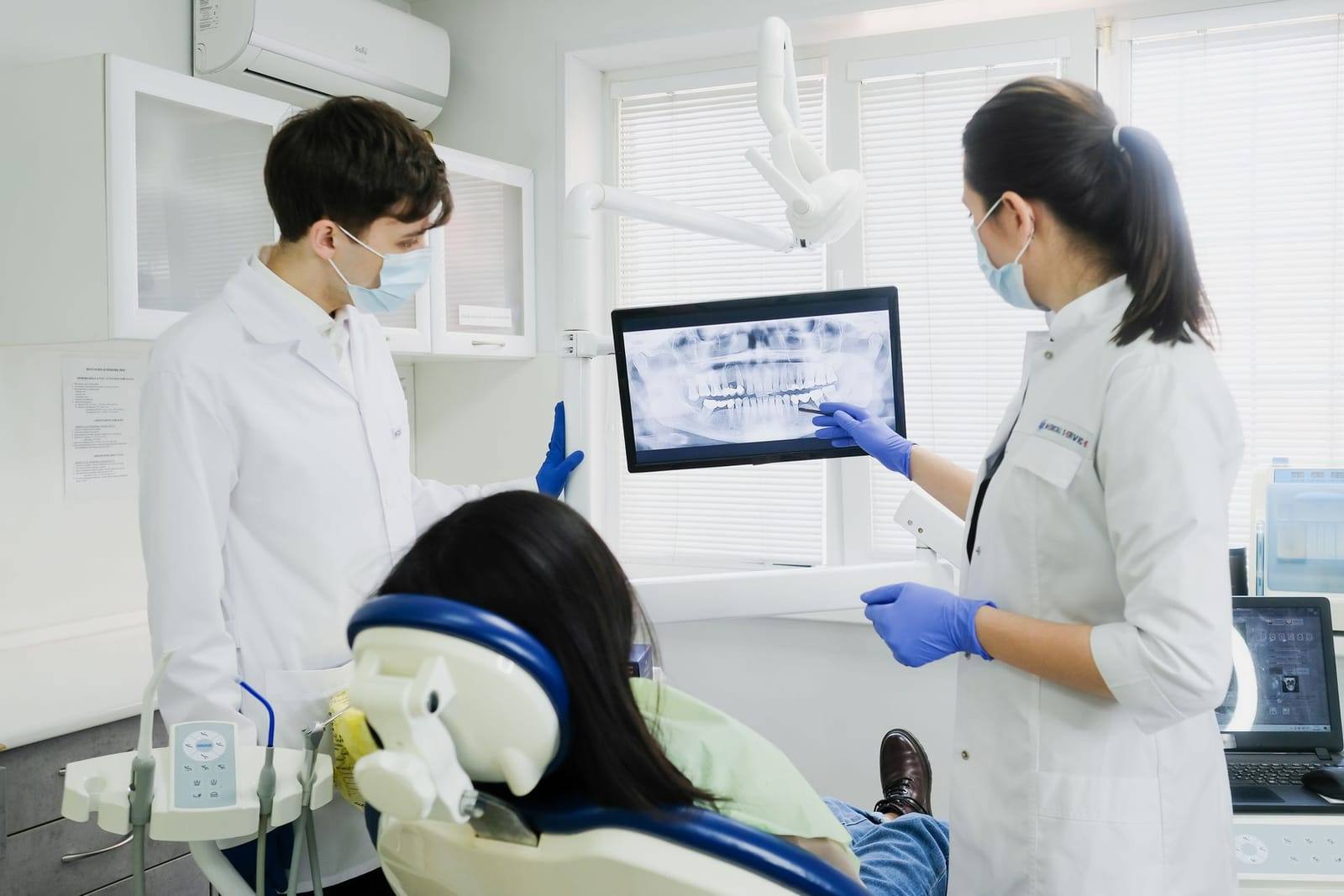
PRF concentrates platelets and growth factors from your own blood into a soft membrane or plug. Surgeons use it to support healing after extractions, grafts and implants.
Platelet-rich fibrin, or PRF, is a natural healing aid prepared from your own blood. At the start of your procedure, a small sample is drawn from your arm, usually about the amount taken for a routine blood test. It is spun in a centrifuge for a few minutes, which separates a gel-like layer rich in platelets, white blood cells and fibrin, the protein that forms the framework of a blood clot. That layer can be shaped into a soft membrane or plug, or mixed with bone graft material.
Because it comes from you, there is no donor material and very little risk of an allergic reaction. Platelets release growth factors that play a part in normal wound healing, and the fibrin framework helps hold a stable clot in place while the tissue repairs.
Where PRF is used at Molly
- Extraction sockets, including wisdom teeth, where a PRF plug may help protect the clot. Some studies suggest it can reduce the chance of dry socket and early discomfort, though results vary.
- Bone grafts and sinus lifts, where PRF is mixed with graft material to make it easier to handle and to support soft tissue closure. See bone grafting and sinus lift.
- Gum grafts, where a PRF membrane can cover the palate donor site or the graft itself.
- Implant placement, particularly when an implant is placed into a fresh extraction socket.
Your surgeon will suggest PRF when it is likely to help, and will tell you when it is not needed. If you are already having IV sedation, the sample is usually drawn through the same line, so there is no extra needle.
What to expect
The blood draw takes a minute or two, and the sample is prepared in the operatory while your procedure begins. Recovery follows the instructions for the main procedure. PRF does not add any separate healing time or restrictions, and most patients are not aware of it once it is placed.
It is worth being clear about what PRF is and is not. It is a supportive tool with a reasonable body of research behind it, especially for soft tissue healing. It is not a substitute for careful surgery, good aftercare or stopping smoking, and it cannot make a poor graft site succeed. Your surgeon will explain the expected benefit for your procedure, and its cost appears as its own line on your written quote so you can decide.