A minor procedure that uncovers an impacted canine and attaches a small bracket, so your orthodontist can guide the tooth into the arch. Planned on a 3D CBCT scan.
The upper canines, or eyeteeth, are usually among the last front teeth to come in, typically between ages 11 and 13. They are also, after wisdom teeth, the teeth most likely to become impacted, meaning they stay stuck in the bone instead of erupting. An impacted canine can sit high in the palate or toward the lip, and if it is left alone it can damage the roots of the neighboring teeth or leave a gap that a baby tooth eventually can no longer hold.
Canines matter. They have the longest roots in the mouth, they guide how your jaws move when you chew, and they shape the corners of your smile. Bringing an impacted canine into place is usually worth the effort, and it is one of the most common ways oral surgeons and orthodontists work together.
How exposure and bonding works
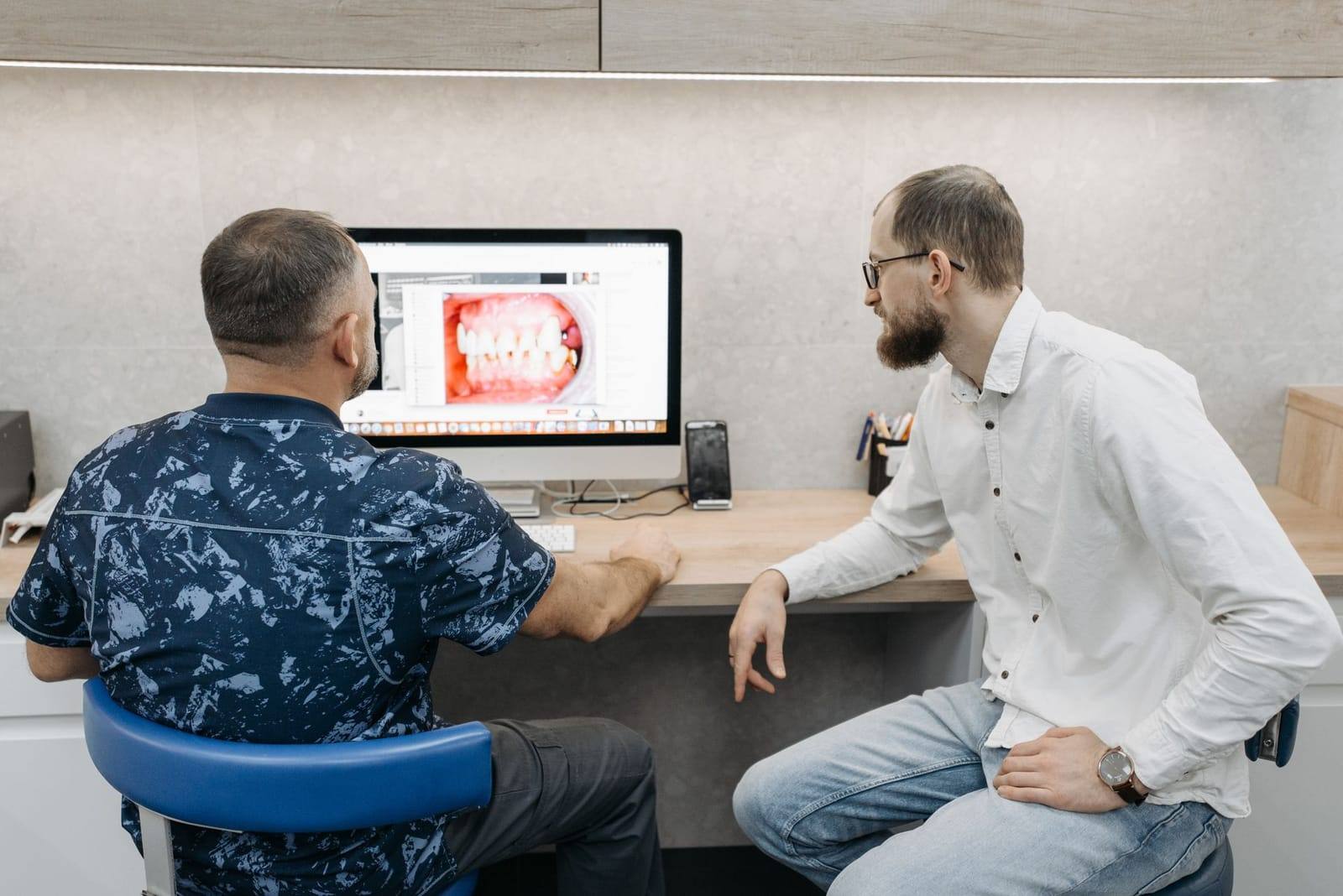
Your orthodontist usually starts by creating space in the arch with braces. Your Molly surgeon then reviews a 3D CBCT scan, which shows exactly where the canine sits, which way it is pointing and how close it is to the roots of the teeth beside it. That precision lets the surgeon plan the smallest possible opening.
During the procedure, the gum and any thin bone over the crown of the canine are gently moved aside. A small orthodontic bracket with a fine gold chain is bonded to the tooth, the gum is repositioned, and the chain is attached to your braces. Over the following months, your orthodontist applies light, steady pressure to guide the tooth into the arch. Some canines close to the surface are simply uncovered and allowed to erupt on their own.
The same approach is sometimes used for other impacted teeth, such as premolars or upper incisors. In rare cases a tooth is too badly positioned to move safely, and your surgeon and orthodontist will discuss removal and future options such as a dental implant once growth is complete.
Comfort and recovery
The procedure is usually done with local anesthetic, often with nitrous oxide, or with IV sedation for teens and adults who prefer it. Most patients have mild soreness and a little swelling for two to three days and return to school or work within a day or two. Your surgeon calls the evening after, and we send a written report to your orthodontist so the next step can be scheduled without delay.