Assessment and treatment of troubled implants, from peri-implantitis cleaning and regenerative grafting to careful removal and replacement.
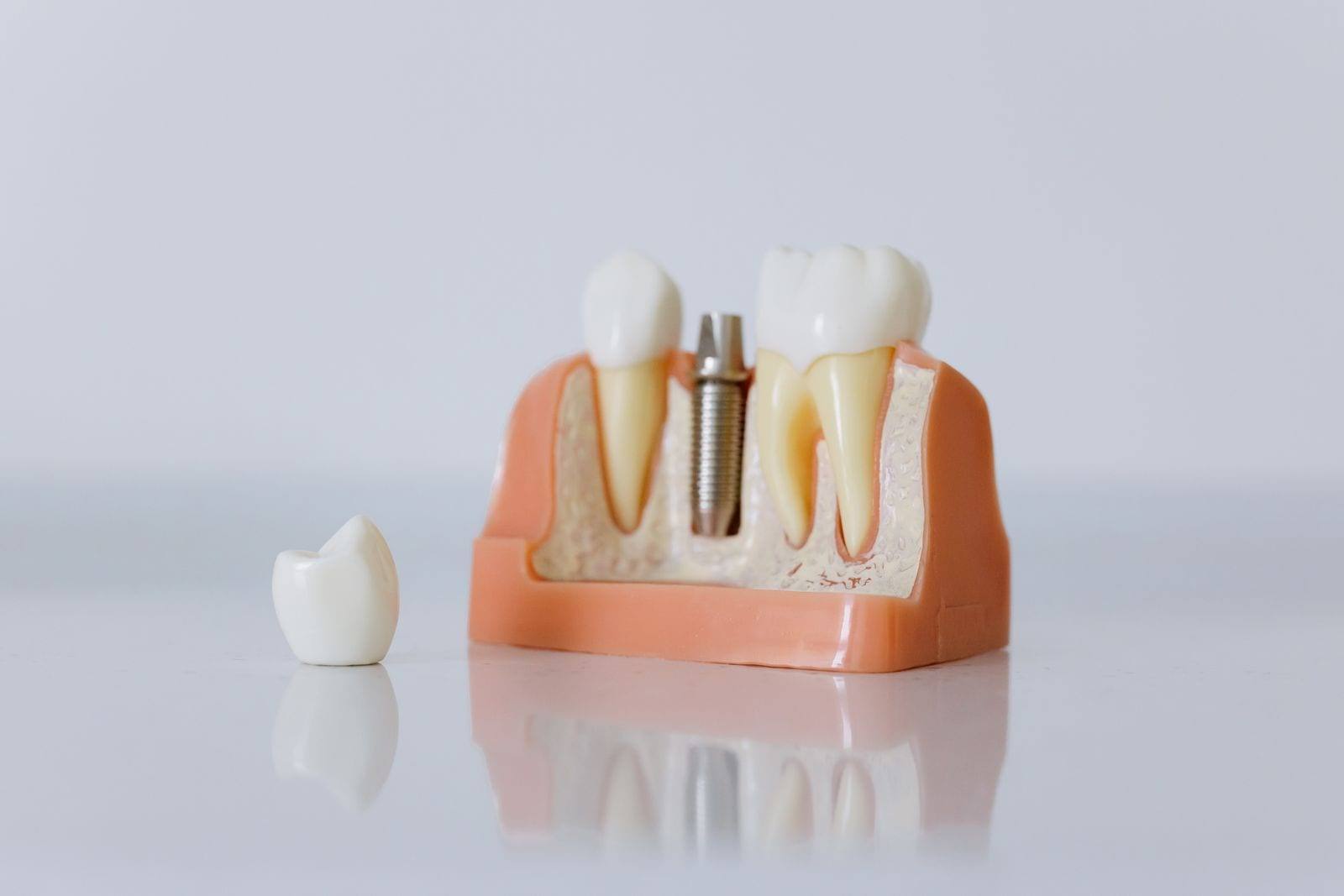
Most dental implants do well for many years. Some don't. An implant can become loose, the gum around it can become inflamed and bleed, bone can be lost around its threads, or the crown can sit in a way that looks or feels wrong. Implant revision is the work of diagnosing what has gone wrong and fixing it, whether the implant was placed at Molly or elsewhere.
Common reasons implants struggle
- Peri-implantitis. An infection of the gum and bone around an implant, similar to gum disease around a tooth. It often starts quietly, with bleeding or swelling, and can lead to bone loss.
- Overload. Grinding, a bite that doesn't fit, or too few implants supporting a bridge can stress the bone.
- Position. An implant placed at the wrong angle or depth can be hard to clean or impossible to restore well.
- Hardware problems. A loose screw, a cracked abutment or a worn bridge can make a sound implant feel like it is failing.
- Failed integration. Occasionally an implant never bonds properly with the bone.
Smoking, uncontrolled diabetes and a history of gum disease raise the risk of all of these.
How we assess and treat it
Your visit starts with a 3D cone-beam CT (CBCT) scan, X-rays and a careful exam of the gum, bite and restoration. If you can, bring any records you have, especially the implant brand or a card from the original practice. Identifying the system helps us find compatible parts.
Treatment depends on what we find. Early peri-implantitis is often managed by cleaning and decontaminating the implant surface and improving home care. More advanced bone loss may call for surgery to clean the implant thoroughly and, where the shape of the defect allows, rebuild bone with a graft and platelet-rich fibrin. Bite and hardware problems may only need a new screw, abutment or crown.
When an implant can't be saved, your surgeon removes it with specialized tools designed to preserve as much bone as possible. The site is usually grafted, and a new implant is placed once it heals, often after three to six months. Sometimes a new implant can go in at the same visit.
Full-arch rescue
Revision also covers full-arch bridges that are loose, broken or failing. Your surgeon and an in-house prosthodontist assess every implant, keep those that are healthy and plan replacements where needed. When upper bone loss is severe, zygomatic implants may be an option. As with all Molly care, you get one written quote, and your general dentist receives a report.