A graft placed in the socket right after a tooth is removed, to limit the bone shrinkage that usually follows. It keeps the site ready for an implant later.
When a tooth is removed, the bone that held it begins to remodel. Over the first few months, the ridge can lose a meaningful share of its width and some of its height, and the loss is often greatest at the front of the socket where the bone is thinnest. That is a problem if you plan to replace the tooth with an implant later, because the implant needs enough bone around it to be stable and to look natural.
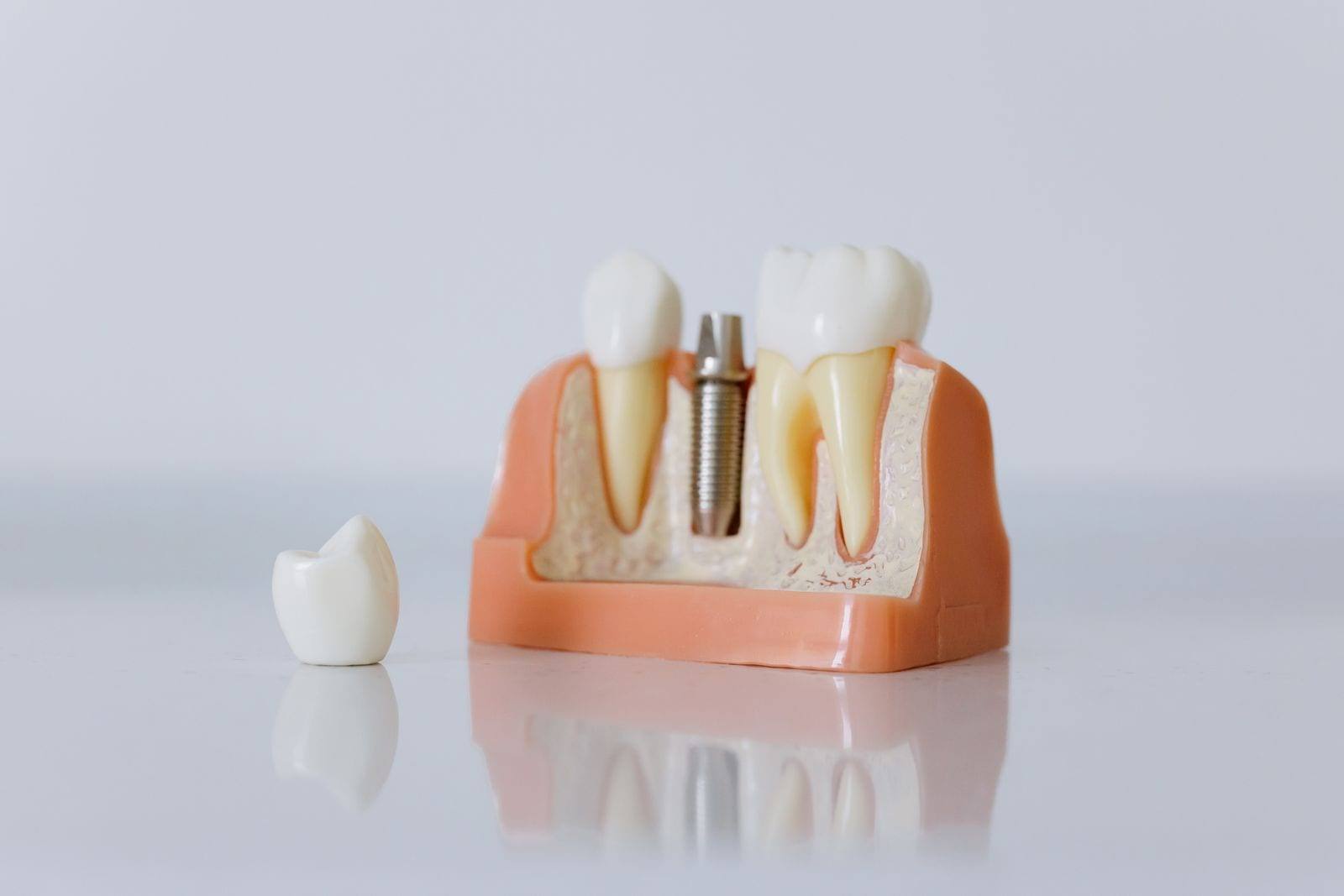
Socket preservation, also called ridge preservation, is a simple graft placed at the time of the extraction. Bone graft material is packed into the empty socket and covered with a collagen membrane, and the gum is closed over it or left to heal over the membrane. The graft acts as a scaffold that your own bone gradually grows into.
How it is done at Molly
Your surgeon reviews a 3D CBCT scan before the extraction to see how thick the surrounding bone is and whether any of it is already missing. The tooth is then removed as gently as possible, often in sections, to protect the thin walls of the socket. The socket is cleaned, the graft is placed, and a membrane holds it in position. Many surgeons add platelet-rich fibrin, made from a small sample of your own blood, to support soft tissue healing.
The procedure adds only a few minutes to a tooth extraction. Local anesthetic keeps you comfortable, and IV sedation is available if you would prefer to be relaxed and unaware of the procedure.
Recovery and timing
Recovery is usually much like a routine extraction: some tenderness and swelling for two to three days, and most patients are back at work the next day. You may see a few small granules of graft material in your mouth during the first week. That is normal and not a sign that the graft has failed.
The site typically heals for three to five months before an implant is placed, and your surgeon confirms bone fill on a follow-up scan. In some cases an implant can be placed on the day of extraction instead; your surgeon will explain which approach suits your bone, gum and the tooth being removed.
Socket preservation does not stop all bone change, and it is not needed for every extraction. It is most useful when an implant is likely, when the socket walls are thin, or when the tooth is in a visible part of your smile. You will get one written quote, including the graft, before anything is scheduled, and your surgeon calls the evening after your procedure to see how you are doing.