FAQ
Questions, answered plainly
Can’t find what you’re looking for? Call, text or email. A person on our patient care team will get back to you, usually within the hour.
Your Consultation
Do I need a referral to see a Molly surgeon?
No. You can book directly with any of our offices, and most consultations are available within 48 hours. Referrals from dentists and orthodontists are always welcome, and if your dentist has recent X-rays, we'll request them so you may not need new ones. Some HMO or medical plans require a referral for coverage, and we'll tell you if yours does.
What happens at my first consultation?
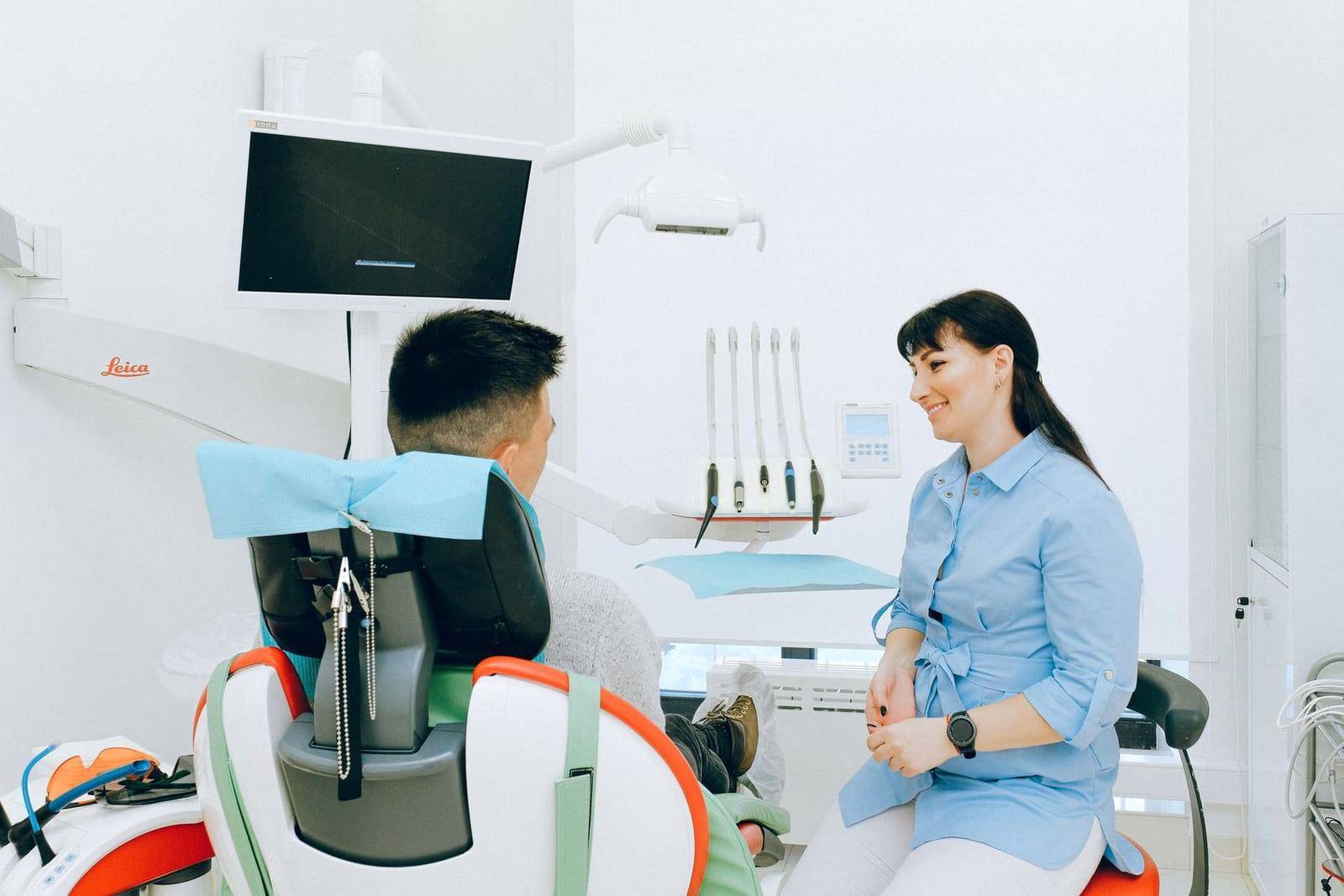
You meet the surgeon who would do your procedure. We take any imaging you need, usually a panoramic X-ray and, for implants or teeth near a nerve, a 3D CBCT scan. Your surgeon examines you, explains what they see on the screen, talks through your options and anesthesia choices, and answers your questions. You leave with one written quote and no pressure to schedule on the spot.
How soon can I get an appointment?
Most consultations are booked within 48 hours, and many offices can see you the same or next day. If you have swelling, severe pain or an injury, call your nearest office and we'll fit you in the same day whenever possible.
What should I bring to my consultation?
Please bring a photo ID, your dental and medical insurance cards, a list of the medications and supplements you take, and any recent X-rays or your referral slip if you have one. If you are under 18, a parent or guardian needs to come with you. Completing the online forms before your visit saves time in the office.
Will I meet my surgeon before surgery day?
Yes. At Molly you meet your surgeon at your consultation, not for the first time on the day of surgery. They review your scans with you, explain the plan and answer your questions, and the same surgeon performs your procedure.
Insurance & Billing
Does dental or medical insurance pay for oral surgery?
It depends on the procedure. Wisdom teeth, extractions, implants and grafts are usually billed to dental insurance. Corrective jaw surgery, facial trauma, biopsies and sleep apnea surgery are usually billed to medical insurance. Some care, such as infected wisdom teeth or anesthesia, can involve both. We check your dental and medical plans before treatment and show the expected payments on one written estimate.
Will I know the full cost before surgery?
Yes. Before anything is scheduled, you receive one written estimate that includes imaging, anesthesia, the procedure itself and follow-up visits. We verify your dental and medical benefits first, so the estimate shows what your plans are expected to pay and what your share is likely to be. If anything changes during treatment, we explain it before going ahead.
Which insurance plans do you accept?
We are in network with most dental PPO plans, including Delta Dental of California, Cigna, Aetna, MetLife, Guardian, United Concordia, Ameritas, Principal, Humana, Anthem Blue Cross, Blue Shield of California and GEHA. We bill medical insurance for jaw surgery, trauma, pathology and sleep apnea surgery. If your plan isn't listed, call us and we'll check it for you.
Do you offer financing or payment plans?
Yes. We offer 0% in-house payment plans of up to 12 months, and we work with CareCredit and Sunbit. For full-arch implant treatment, Proceed Finance offers longer terms. HSA and FSA cards are accepted for most procedures. Our team can walk you through the options when you receive your quote.
Do you accept Denti-Cal (Medi-Cal Dental)?
Denti-Cal is accepted for patients under 21 at select Molly offices. Call your nearest office and we'll confirm whether it participates and which procedures are covered. Children with cleft-related needs may also qualify for California Children's Services (CCS).
Wisdom Teeth
How much time off school or work will I need after wisdom teeth removal?
Most people need three to five days before they feel ready for school, desk work and normal routines. Plan on resting for the first day or two, when swelling is building. Physical jobs, sports and strenuous exercise usually wait about a week, and deeply impacted teeth can take a little longer. Many students schedule surgery at the start of a school break.
What is dry socket?
Dry socket happens when the blood clot in a tooth socket, most often a lower wisdom tooth, breaks down or dislodges too early, exposing the bone. It usually shows up as a throbbing ache two to four days after surgery, sometimes spreading toward the ear. It is uncomfortable but treatable: a soothing medicated dressing at a short visit usually brings relief within hours. Not smoking or vaping, avoiding straws and following your aftercare instructions lower the risk.
At what age should wisdom teeth be checked?
Most teens are evaluated between about 15 and 17, when an X-ray can show where the teeth are heading. When removal is needed, it is usually simpler in the late teens or early twenties, before the roots are fully formed. Adults can have wisdom teeth assessed and removed at any age.
Do all four wisdom teeth have to come out?
Not always. Your surgeon recommends removing only the teeth that are causing problems or are likely to. In practice, many patients have all four removed at once, because it means one recovery instead of several, but some teeth can be left and monitored.
What can I eat after wisdom teeth removal?
For the first few days, choose cool, soft foods: yogurt, applesauce, smoothies eaten with a spoon, mashed potatoes, scrambled eggs, pasta and lukewarm soup. Avoid straws, crunchy or spicy foods, and anything with small seeds or grains that can lodge in the sockets. Most people are back to a normal diet within one to two weeks.
Dental Implants
What does a dental implant cost all-in?
A single implant with its abutment and crown starts at $3,900. If you need an extraction, a bone graft, a sinus lift or sedation, those are added to your quote only when they apply. After your complimentary consultation and 3D CBCT scan, you receive one written estimate covering every step, with your insurance applied, so the number you see is the number you pay. Financing and 0% in-house plans are available.
Is the implant consultation really complimentary?
Yes. Your implant consultation, including a 3D CBCT scan, is complimentary. You meet the surgeon, see your scan, hear your options, including alternatives to implants, and receive a written quote. There is no obligation to go ahead.
How long does the implant process take?
For a single implant, typically four to seven months from placement to the final crown, because the bone needs about three to six months to bond to the implant. If a bone graft is needed first, add a few months. Full-arch patients usually receive fixed provisional teeth on the day of surgery, with the final bridge about four to six months later.
Am I too old for dental implants?
Age alone is rarely the deciding factor. Many patients in their seventies and eighties have implants successfully. What matters more is your general health, your bone, how well conditions such as diabetes are controlled, and whether you smoke. Your surgeon will review your medical history and scan with you.
What is the difference between an implant, full-arch implants and an implant denture?
A single implant replaces one tooth with a crown. Full-arch implants, often called All-on-4 or All-on-X, replace all the teeth in a jaw with a fixed bridge on four to six implants that only your dental team removes. An implant-supported denture is a removable denture that snaps onto two to four implants. Your surgeon and prosthodontist will explain which fits your mouth, priorities and budget.
Anesthesia & Safety
Will I be asleep during surgery?
That depends on the procedure and on what you prefer. With IV sedation, the most common choice, you are deeply relaxed and most people remember little or nothing, though you keep breathing on your own. General anesthesia, where you are fully asleep, is available for longer or more complex procedures at offices with a dedicated dentist anesthesiologist or CRNA. Local anesthetic, with or without nitrous oxide, lets you stay awake and comfortable. Your surgeon will help you choose at your consultation.
I'm very nervous about oral surgery. What can help?
You're far from alone, and it's worth telling us. Your surgeon will explain exactly what will happen at your consultation, so nothing is a surprise. Many anxious patients choose IV sedation, and general anesthesia is available for longer cases. On the day, the team talks you through each step, and you can ask to pause at any time. Most patients tell us afterward that it was much easier than they expected.
Can I drive after surgery?
Not after IV sedation or general anesthesia. You need an adult escort who stays at the office, drives you home and stays with you for the rest of the day, and you shouldn't drive, operate machinery or drink alcohol for 24 hours. After local anesthetic alone, or with nitrous oxide, most adults can drive themselves home.
How is my safety monitored during anesthesia?
Throughout sedation or general anesthesia, you are monitored continuously with ECG for heart rhythm, pulse oximetry for oxygen and capnography for breathing, with regular blood pressure checks and supplemental oxygen. Every Molly office is AAAHC-accredited and equipped for emergencies, and our surgeons hold California anesthesia permits. Longer cases have a dedicated dentist anesthesiologist or CRNA whose only job is your anesthesia.
Why do I have to fast before sedation?
An empty stomach lowers the risk of stomach contents entering the lungs while you are sedated, a rare but serious complication. Your written instructions will usually ask for nothing to eat or drink for about 8 hours before your appointment, with approved medications taken with a small sip of water. Please follow them exactly, or your procedure may need to be rescheduled for your safety.
Recovery
Will someone check on me after surgery?
Yes. Your surgeon calls you the evening after your surgery to see how you are feeling and answer any questions. You also go home with written instructions, and follow-up visits are included in your quote.
What if I have a problem at night or on the weekend?
Call the 24/7 surgeon line. A Molly oral surgeon answers any night of the week and can advise you, call in a prescription when appropriate, or arrange to see you first thing. For difficulty breathing or swallowing, or heavy bleeding that won't stop with pressure, call 911.
How much pain should I expect after oral surgery?
Most patients describe soreness rather than severe pain, usually at its worst in the first two to three days and then improving. Many manage with a combination of over-the-counter ibuprofen and acetaminophen taken on a schedule, and your surgeon may prescribe something stronger for a short time. Pain that gets worse after day three is worth a call, because it can be a sign of dry socket or infection.
How can I keep swelling down?
Use ice packs on your cheeks, 20 minutes on and 20 minutes off, for the first 24 to 36 hours, and sleep with your head raised on an extra pillow. Swelling usually peaks on the second or third day and then fades. After that, warm compresses can ease stiffness. Swelling that keeps increasing after day three, or comes with a fever, should be checked.
When can I exercise again?
Light walking is fine after a day or two. Strenuous exercise, weight training and contact sports usually wait about a week after wisdom teeth or implant surgery, and longer after jaw surgery. Exercising too early can increase bleeding and swelling. Your surgeon will confirm what is right for you at your follow-up.
Referrals
How do I refer a patient to Molly?
Referring offices can send a referral through the online form on our Referrals page, by email or by calling the referral line. Include the reason for referral and any recent X-rays or scans. We contact the patient to schedule, usually within one business day, and let your office know when they are booked.
How do referring dentists receive reports?
After the consultation, we send a written report with our findings, imaging and the treatment plan. After surgery, you receive an operative summary and, for implants, the implant system, size and position, plus a note when the patient is ready to be restored. Reports go out by secure email or through your preferred method.
Will my own dentist stay involved in my care?
Yes. We see oral surgery as part of your overall dental care, not a replacement for it. Your dentist receives reports at each stage, and for implants many patients have their own dentist make the final crown. After treatment, you return to your dentist for ongoing care.
Can you give a second opinion on a treatment plan?
Yes. If you have been given a plan for implants, wisdom teeth, jaw surgery or another procedure and want another view, a Molly surgeon will review your records and imaging, examine you, and explain what they would recommend and why. Bring any scans or quotes you have. Second-opinion consultations are complimentary.
Can my dentist send X-rays so I don't need new ones?
Yes, and we encourage it. If your dentist has taken recent, good-quality X-rays, we'll request them before your visit. Your surgeon may still need a panoramic X-ray or 3D CBCT scan for surgical planning, but we won't repeat imaging that isn't needed.
Still have questions?
Our patient care team is here Mon–Thu 7:30am–5pm · Fri 7:30am–2pm. Or book a consultation and ask your surgeon directly.