Does Insurance Cover Wisdom Teeth Removal? A Plain-English Guide
How dental and medical insurance handle wisdom teeth removal and sedation, what the billing codes mean, and how to avoid surprises before surgery day.

At our Huntington Beach and Fullerton offices, I see a lot of high school seniors and college students home for break. After “Will it hurt?” the next question is almost always from a parent: “What will insurance cover?”
The honest answer is that it depends on your plan, but the rules are more predictable than they seem. Here is how coverage for wisdom teeth removal usually works, what the codes on your estimate mean, and the steps that prevent surprises.
The short answer
Most dental insurance plans cover wisdom teeth removal in part, typically at 50 to 80 percent after your deductible, up to your plan’s annual maximum. Anesthesia coverage varies more. In some cases, particularly with impacted teeth or infection, medical insurance may pay for part of the treatment instead.
As a typical guide before insurance, wisdom teeth removal at Molly starts from $395 per tooth, and IV sedation starts from $495. Your actual cost depends on how the teeth are positioned and what your plan pays.
What the codes on your estimate mean
Dental insurers pay according to procedure codes, called CDT codes. For wisdom teeth, the code depends on how much of the tooth is covered by gum and bone. That is why the price is not the same for every tooth.
- D7140 or D7210: erupted tooth. The tooth has come in. D7140 is a routine extraction; D7210 is used when the tooth needs to be sectioned or bone removed.
- D7220: soft tissue impaction. The crown is under the gum but not the bone. This is usually the simplest impacted removal.
- D7230: partial bony impaction. Part of the crown is still covered by bone.
- D7240: complete bony impaction. The tooth is fully encased in bone. This takes the most surgical time and is the highest fee.
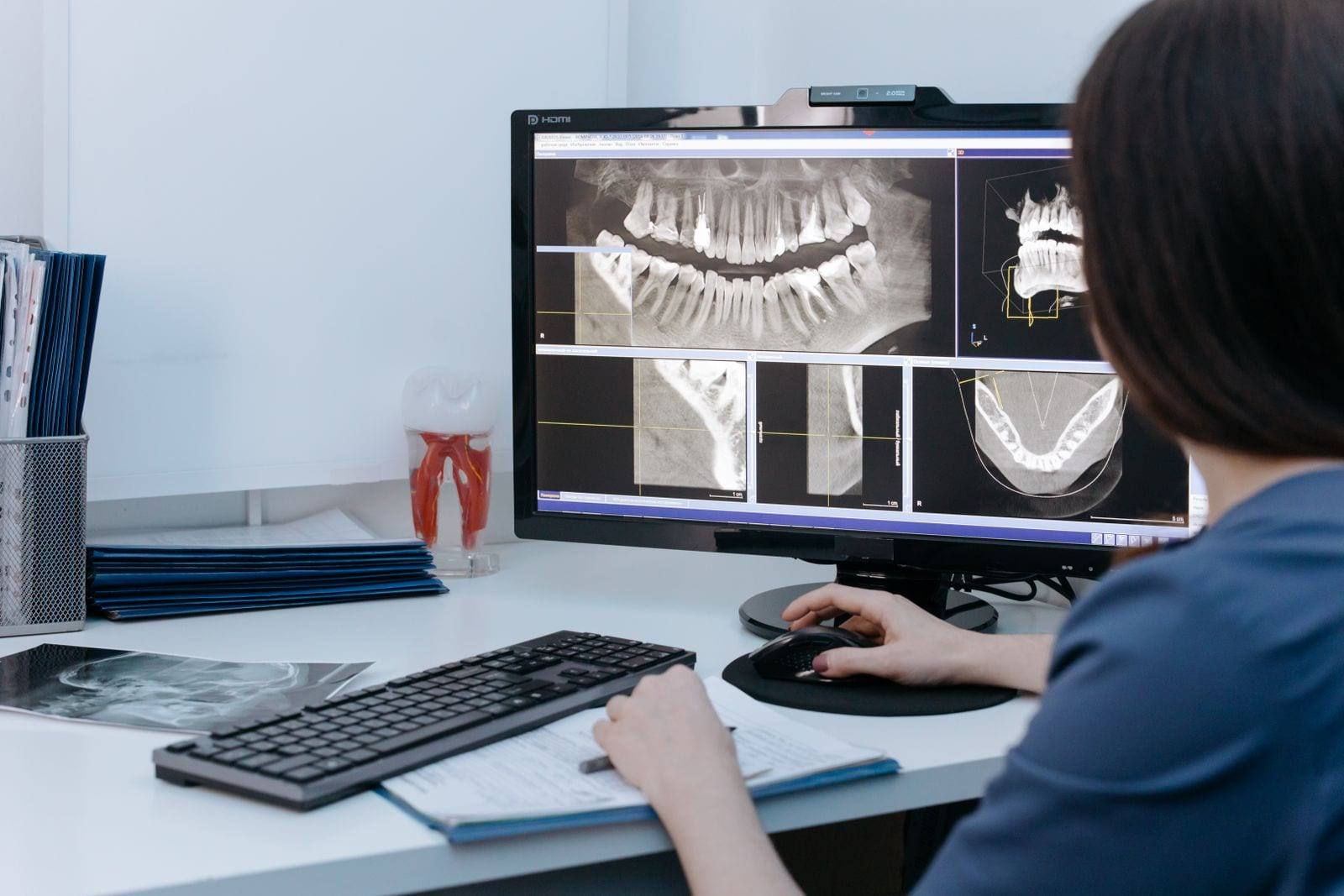
Your X-ray or 3D scan determines which code applies to each tooth. Many patients have a mix, for example two upper teeth coded D7220 and two lower teeth coded D7240. Insurers sometimes review the X-rays before agreeing to the code, which is one reason we send imaging with the claim.
How sedation and anesthesia are covered
This is where most surprises happen. Local anesthesia, the numbing injection, is included in the extraction fee. IV sedation and general anesthesia are billed separately, usually in 15-minute increments.
Dental plans treat sedation in different ways:
- Some cover it whenever wisdom teeth are impacted.
- Some cover it only for complete bony impactions or for a certain number of teeth.
- Some exclude it entirely and consider it elective.
Most of our wisdom teeth patients choose IV sedation. If your plan does not cover it, you will know the out-of-pocket cost in advance, and you can decide with full information. Local anesthesia with nitrous oxide is an option for some simpler cases.
When medical insurance may help
Medical insurance does not usually pay for routine wisdom teeth removal. However, some medical plans contribute when the teeth are fully impacted in bone, associated with a cyst or other pathology, or causing a significant infection. Medical coverage is also more common when a patient has a health condition that affects how surgery must be done.
At Molly we check your dental and medical insurance before anything is scheduled. If medical coverage applies, we will bill it first and send the remainder to your dental plan.
Plan details that change your cost
A few features of your plan matter more than the percentage on the summary page:
- Annual maximum. Many dental PPOs cap benefits at $1,000 to $2,000 per year. Four impacted wisdom teeth with sedation can use most or all of that. If you have other dental work planned, timing matters.
- Deductible. Usually $50 to $100 per person per year, applied before the plan pays.
- Waiting periods. New plans often have a 6- to 12-month wait before covering oral surgery. If you just enrolled, check before you book.
- Frequency and age limits. Some plans limit how often panoramic X-rays are covered, or have age rules for certain procedures.
- Network status. In-network offices charge a contracted fee, which usually means a lower bill. Molly is in network with most dental PPOs, including Delta Dental of California, Cigna, Aetna, MetLife, Guardian, United Concordia, Ameritas, Principal, Humana, Anthem Blue Cross, Blue Shield of California and GEHA.
Year-end timing is worth knowing about. If your annual maximum resets in January, scheduling two teeth in December and two in January can sometimes let you use two years of benefits. Your surgeon will confirm whether splitting the surgery is sensible for your case. Often it is simpler and better to do all four at once.
Students and young adults
Under federal law, medical plans that cover dependents must allow children to stay on a parent’s plan until age 26. Many employer dental plans follow the same rule, though dental coverage is not always held to it, so confirm your plan’s age limit. If you are close to aging out, it is worth scheduling the evaluation sooner.
For patients under 21 with Medi-Cal, Denti-Cal (Medi-Cal Dental) is accepted at select Molly offices. Ask when you book and we will direct you to the right one.
How to avoid surprises
- Ask for a predetermination. This is a pre-treatment estimate from your insurer based on the planned codes. It is not a promise of payment, but it is the clearest preview available. It typically takes two to four weeks.
- Get one written estimate. Our estimate covers imaging, anesthesia, surgery and follow-up visits together, so there is no separate bill you did not expect.
- Bring both insurance cards to your consultation, dental and medical.
- Ask about payment options. We accept HSA and FSA cards, CareCredit and Sunbit, and offer 0% in-house plans for up to 12 months.
Insurance should not be the reason a problem wisdom tooth is left in place, and it should not be a mystery. If you are unsure what your plan covers, book a consultation. We will check your benefits, review your X-rays and give you a clear number before anything is scheduled.
About the author
Dr. Lauren Mitchell, DDS, MD
Dr. Mitchell removes wisdom teeth and other teeth and places implants in Huntington Beach and Fullerton, with a gift for explaining insurance.
This article is for general education and isn’t a substitute for an examination. If you have symptoms, see your dentist or book a consultation with an oral surgeon.