All-on-4 vs. Dentures: How to Choose
A prosthodontist compares full-arch implant teeth (All-on-4 or All-on-X) with conventional and implant-supported dentures: comfort, bone, cost and process.

If you wear dentures, or you are about to lose the rest of your teeth, you have probably heard of “All-on-4.” It is a common name for fixed teeth supported by four implants. At Molly we call it full-arch treatment, or All-on-X, because the number of implants depends on your bone. Some arches need four. Some do better with five or six.
I am a prosthodontist. I design and make the teeth that sit on the implants, and I also make conventional dentures. Both have a place. Here is how they compare, honestly, so you can decide what fits your life.
How each option works
A conventional denture is a removable set of teeth on an acrylic base. An upper denture is held in place by suction against the palate. A lower denture rests on the gum ridge and is held mostly by the tongue, cheeks and muscle control, which is why lower dentures are often the harder ones to wear.
Full-arch implant teeth are a fixed bridge of teeth screwed onto four to six implants in the jawbone. You do not take them out at home. Only your dental team removes them, for cleaning and checks.
There is a middle option, too. An implant-supported denture, or overdenture, snaps onto two to four implants. It is still removable, but it is far more stable than a conventional denture, especially on the lower jaw.
Chewing, comfort and confidence
This is where the difference is most noticeable. Studies consistently show that people chew more efficiently with implant-supported teeth than with conventional dentures. Patients tell me the same thing in plainer words: they can eat a salad, bite an apple slice or order a steak without planning around it.
Because full-arch teeth do not cover the roof of the mouth, many people find food tastes more natural and speech feels easier. There is no adhesive, and no worry about the teeth moving when you laugh.
Dentures still work well for many people, particularly an upper denture with a good ridge of bone. If yours fits comfortably and you are happy with how you eat, there may be no reason to change.
What happens to the jawbone
When teeth are lost, the bone that held them slowly shrinks, because it is no longer stimulated by chewing. Dentures do not stop this process, which is why they tend to loosen over the years and need relines or replacement. Over a long time, the lower face can look shorter as the bone recedes.
Implants place load into the bone, which helps preserve it around the implants. They do not make you immune to bone loss, but they slow it in the areas where they sit.
Cost over the long run
Dentures cost far less at the start. A well-made conventional denture in Southern California is typically a few thousand dollars per arch. Over the years, add relines, repairs, adhesive and replacements roughly every five to eight years.
Full-arch implant treatment typically ranges from about $19,900 to $35,000 per arch in Southern California. At Molly it starts from $19,900 per arch. The number depends on how many implants you need, whether grafting is required, and whether the final teeth are made from zirconia or acrylic over a titanium framework. Implant-supported overdentures usually sit between the two.
Dental insurance typically covers only a small part of full-arch treatment, because annual maximums are limited. Many patients use financing. Proceed Finance offers plans designed for full-arch cases, and we also work with CareCredit and Sunbit. HSA and FSA funds can be used.
What the process looks like
For full-arch treatment at Molly, your surgeon and I plan together from the start:
- Consultation and 3D CBCT scan. We look at your bone, bite and smile, and you see the scan with us. The implant consultation and scan are complimentary.
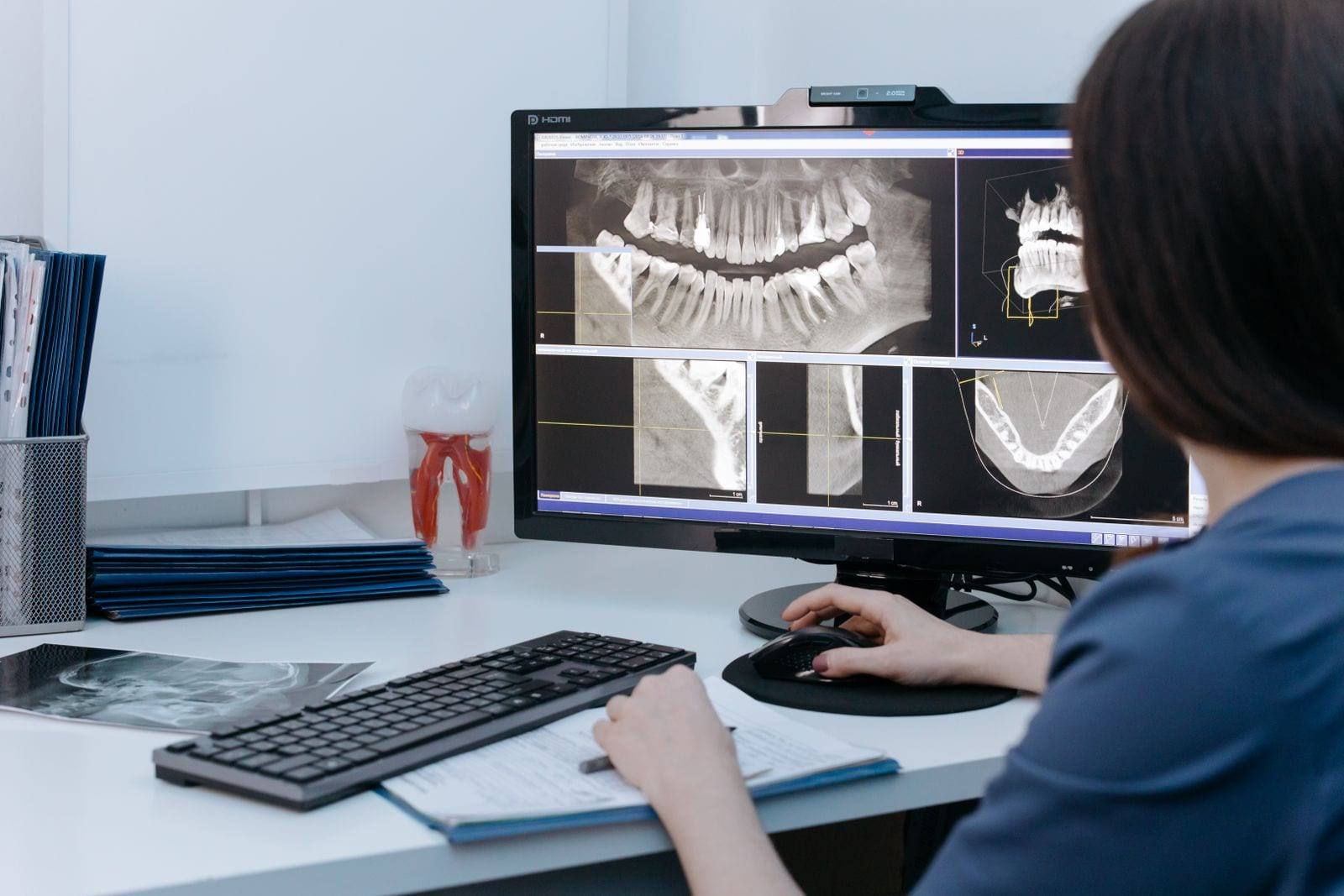
- Digital planning. We plan the implant positions and design your new teeth before surgery.
- Surgery day. Remaining teeth are removed, implants are placed, and in most cases you leave with fixed temporary teeth the same day. This is what we call Teeth in a Day. Most patients choose IV sedation or general anesthesia.
- Healing. Over three to six months, the implants integrate with the bone. You follow a soft diet at first and gradually return to firmer foods.
- Final teeth. I make your final bridge, refining the shape, color and bite based on how you have lived with the temporaries.
Not everyone can have teeth fixed on the day of surgery. If the bone is soft or the implants are not stable enough, your surgeon may recommend a healing period first. We will tell you before surgery if that is likely.
Who is a good candidate
Full-arch treatment tends to suit people who are healthy enough for surgery, have enough bone (or can have it built up, or use zygomatic implants), and are committed to cleaning and regular checkups. Smoking, uncontrolled diabetes and some medications raise the risk of implant problems, and we will discuss these openly.
Dentures may be the better choice if you prefer to avoid surgery, have medical reasons not to have it, or want the lowest upfront cost. An implant-supported overdenture is often a good compromise when a lower denture will not stay put.
Making the decision
There is no single right answer. I have patients who are delighted with a well-made denture and patients who say fixed teeth gave them back the simple pleasure of a family dinner. What matters is that you understand the trade-offs.
At your consultation, we will show you your scan, explain which options suit your mouth, and give you one written estimate for each, covering surgery, anesthesia, temporary teeth and final teeth. Take it home, think it over and call us with any questions. Your surgeon and prosthodontist will confirm what is realistic for you.
About the author
Dr. Jonathan Blake, DDS, MS
Dr. Blake, a prosthodontist, designs the teeth for full-arch, Teeth in a Day and implant denture cases in Newport Beach and Irvine.
This article is for general education and isn’t a substitute for an examination. If you have symptoms, see your dentist or book a consultation with an oral surgeon.